
Professional Mowing Versus DIY: Which Pays Off?
Professional mowing versus DIY comes down to time, tools and finish. See which option suits your Hauraki home, rental or busy household best each week.
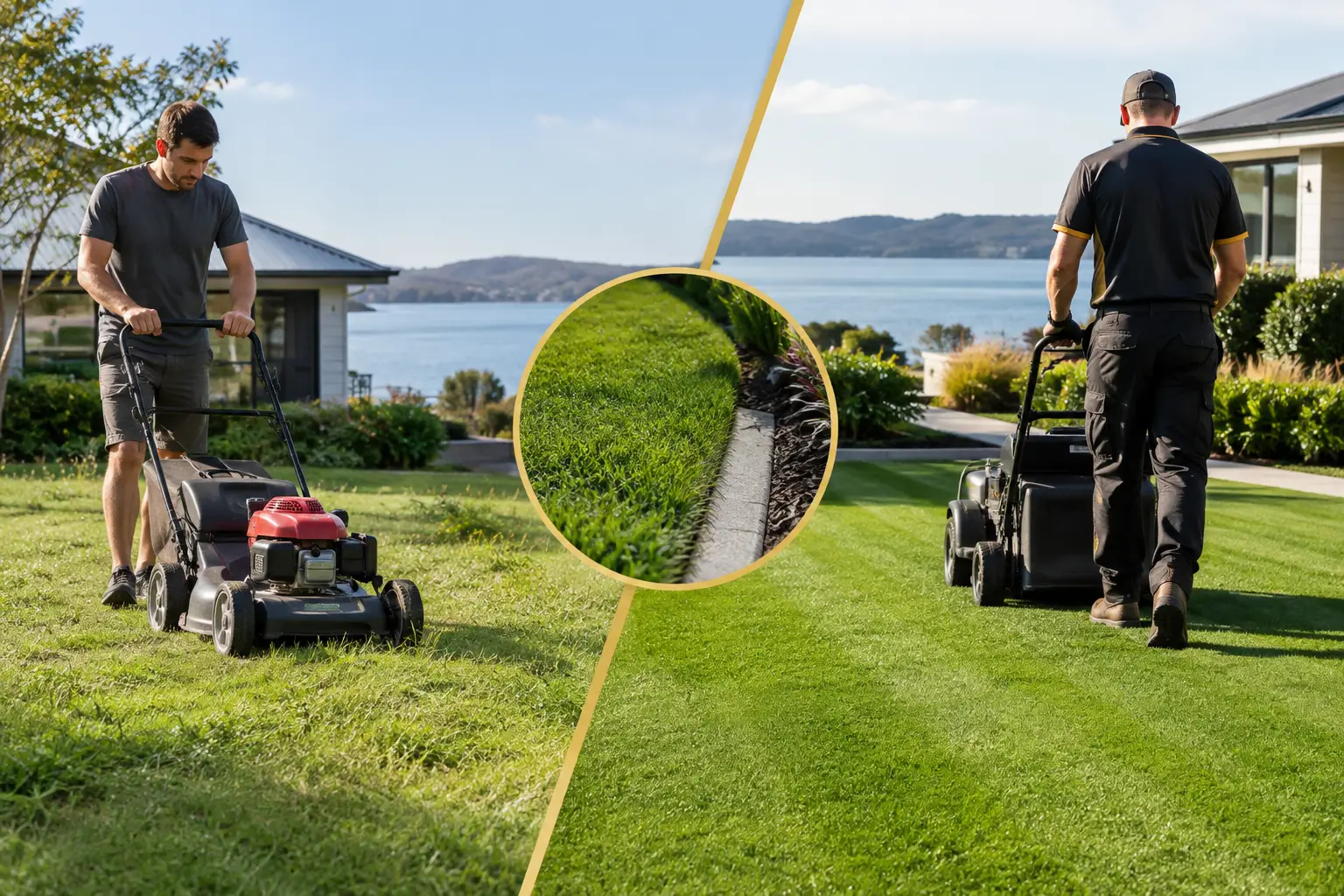
A lawn rarely becomes a problem all at once. It starts with a busy weekend, a bit of rain, then a few more things on the to-do list. Before long, the grass is ankle-high, the edges have disappeared and the mower is glaring at you from the shed. When weighing up professional mowing versus DIY, the real question is not whether you can mow your own lawn. It is whether doing it yourself is the best use of your time, equipment and energy.
For plenty of homeowners around Paeroa, Waihi, Ngātea and Thames, a DIY mow is satisfying. For others, regular lawn care is one more job that never stays done for long. Both options have their place. The better choice depends on the size and condition of your section, your schedule and how tidy you want the finished result to look.
What DIY mowing really involves
DIY mowing can look simple from the kitchen window: wheel the mower out, cut the grass, put it away. In practice, a proper mow includes more than making the lawn shorter.
There is the setup time, fuel or charging, checking the mower is working, clearing sticks and kids' toys from the lawn, trimming along fences and garden beds, edging paths, and blowing or sweeping clippings from hard surfaces. Then there is the clean-up, storage and occasional maintenance when the mower will not start just as rain clouds roll in.
If you enjoy being outside and already own reliable gear, that routine may be no trouble. A smaller, flat lawn can often be mown and tidied in under an hour. It can also be a good way to keep an eye on your property and get a bit of movement into the day.
The catch is consistency. Grass does not care that you have visitors coming, a work deadline or a netball game on Saturday. During fast-growing periods, leaving it an extra week can make the next mow heavier, slower and messier. Long grass can be harder on a domestic mower too, especially when it is damp.
The cost is not only the mower
Doing your own mowing is not free simply because you already have a mower. Blades need sharpening, batteries eventually need replacing, petrol costs money and older machines need repairs. There is also the space required to store everything safely.
That does not mean DIY is poor value. If you mow regularly, keep your equipment maintained and do not mind the job, it can make sense. But it is worth comparing the full cost with the time you give up each fortnight, rather than only comparing a mowing invoice with a mower sitting in the garage.
Professional mowing versus DIY: the practical differences
A professional mowing service is mainly about removing friction. You do not need to find time, maintain equipment or negotiate with a lawn that has grown wildly since the last sunny day. The job is handled as a routine rather than a weekend project.
The visible difference is usually in the finish. A complete service includes mowing the lawn, trimming where the mower cannot reach, edging the boundaries that frame the lawn, and blowing clippings from paths and driveways. Those final steps matter. A freshly cut lawn with shaggy edges and grass scattered over the concrete can still look unfinished.
Professionals also work with equipment designed for repeated use. That can be particularly useful on larger sections, rental properties or lawns with awkward corners, slopes and plenty of fence lines. It is not about making a standard suburban lawn complicated. It is about getting a clean result without turning your Saturday into a maintenance session.
Regular bookings can also prevent lawns from getting away on you. A lawn kept to a sensible schedule is generally easier to mow and looks presentable more often. For landlords and property managers, that consistency can make routine property care simpler without chasing tenants or arranging equipment.
When professional mowing is a sensible call
Professional mowing often suits households where both adults work, parents with sport-filled weekends, retirees who would rather avoid the physical strain, and landlords who do not live near the property. It can also be handy after an injury, during a busy season at work or when a mower has finally called it quits.
It is not an admission of defeat. Nobody gets a medal for spending Sunday afternoon wrestling an extension cord or emptying a catcher six times. If mowing is your quiet time outdoors, keep doing it. If it is the job that hangs over every weekend, outsourcing it can be a very practical choice.
There is a middle ground too. Some people mow most of the year and arrange a one-off service when growth gets ahead of them, when they are away, or before putting a home on the market. Others book a recurring service through the faster-growing months and take over again when life settles down.
The time question most people underestimate
The mowing itself is only one part of the job. Think about the whole chain: deciding when to do it, checking the weather, charging batteries or buying fuel, mowing, trimming, edging, clearing clippings and packing everything away.
A one-hour mow can easily become a two-hour block once the preparation and clean-up are included. That may be completely worthwhile if you enjoy it. But if those two hours are the only clear patch in your week, it is reasonable to spend them with family, on the boat, at the markets or simply having a cuppa while the lawn stays tidy.
Professional mowing is not always the lowest-dollar option, especially for a small, easy lawn and a homeowner who already has gear. Its value is in the time it gives back and the repeatable finish it provides. That is why comparing the options needs more than a price tag.
What about overgrown lawns?
An overgrown lawn is common, especially after wet weather, holidays or a run of busy weeks. There is no need to feel embarrassed about it. It simply takes more work than a lawn that has been maintained regularly.
DIY mowing long grass can mean several passes, a higher cutting setting, frequent catcher emptying and a real chance of bogging down a smaller mower. It can also leave clumps behind if the grass is wet or thick. If you tackle it yourself, avoid cutting it extremely short in one hit. Taking the height down gradually is kinder on both the grass and the machine.
With a professional service, significantly overgrown lawns may need extra time and may incur an additional charge. That is fairer than pretending every lawn takes the same effort. Once it is back under control, recurring mowing can make future visits more straightforward.
A simple way to make the call
Ask yourself three questions. Do you have reliable equipment? Do you genuinely have time to mow, edge and clean up regularly? And do you enjoy the job enough to choose it over everything else you could do that day?
If the answer is yes across the board, DIY is likely a good fit. Keep the mower maintained, avoid mowing soaking-wet grass and stay on top of the schedule. Your lawn will thank you for it.
If one or more answers is no, professional mowing may be the easier option. Hauraki Mowing Services makes that part straightforward: enter your address online, see a property-based price without measuring the lawn, and book in around two minutes. You can also manage bookings through My Mows, which is useful when life changes faster than the grass does.
Choose the option that keeps life tidy
There is no wrong answer in professional mowing versus DIY. A well-kept lawn can come from your own mower or from a regular local service. The best choice is the one you can maintain without stress, last-minute scrambling or sacrificing every decent weekend.
If lawn care is your time outdoors, enjoy it. If it is the chore that keeps getting bumped down the list, let someone else handle the mow, edge and blow while you get back to the parts of home life you actually look forward to.